
does hitchhiking work?

When we inform people that we hitchhike our way around Europe, the response is often one of two questions; either “Does it work?” or “Have you ever had a bad experience?”. We’ve had to answer these questions so many times that it shouldn’t be too difficult to get the responses down on paper. For this post we are going to think a little about, “Does it work?”.
The short answer is yes, it does work. But it all depends on how you define something as ‘working’. Is hitchhiking the quickest way to get from A to B? Probably not. Is hitchhiking the most comfortable way to navigate a continent? Absolutely not. Does talking to a complete stranger in a foreign language for 6 hours ever get tiring? You bet it does.
There are lots of things that are required to make hitchhiking work. We won’t cover them all now, but we can start with three of them to kick things off; patience, flexibility, and ‘the spot’.
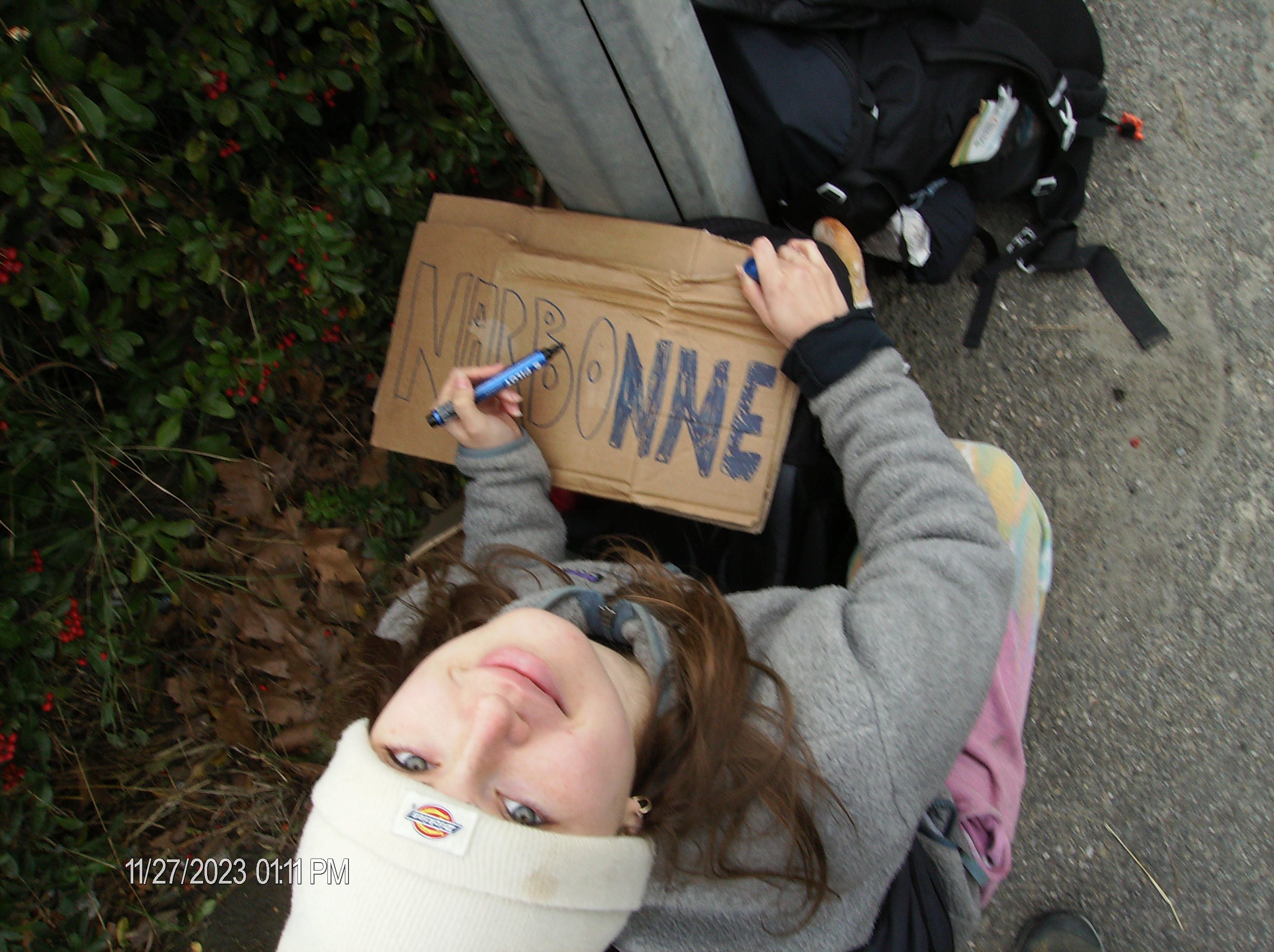
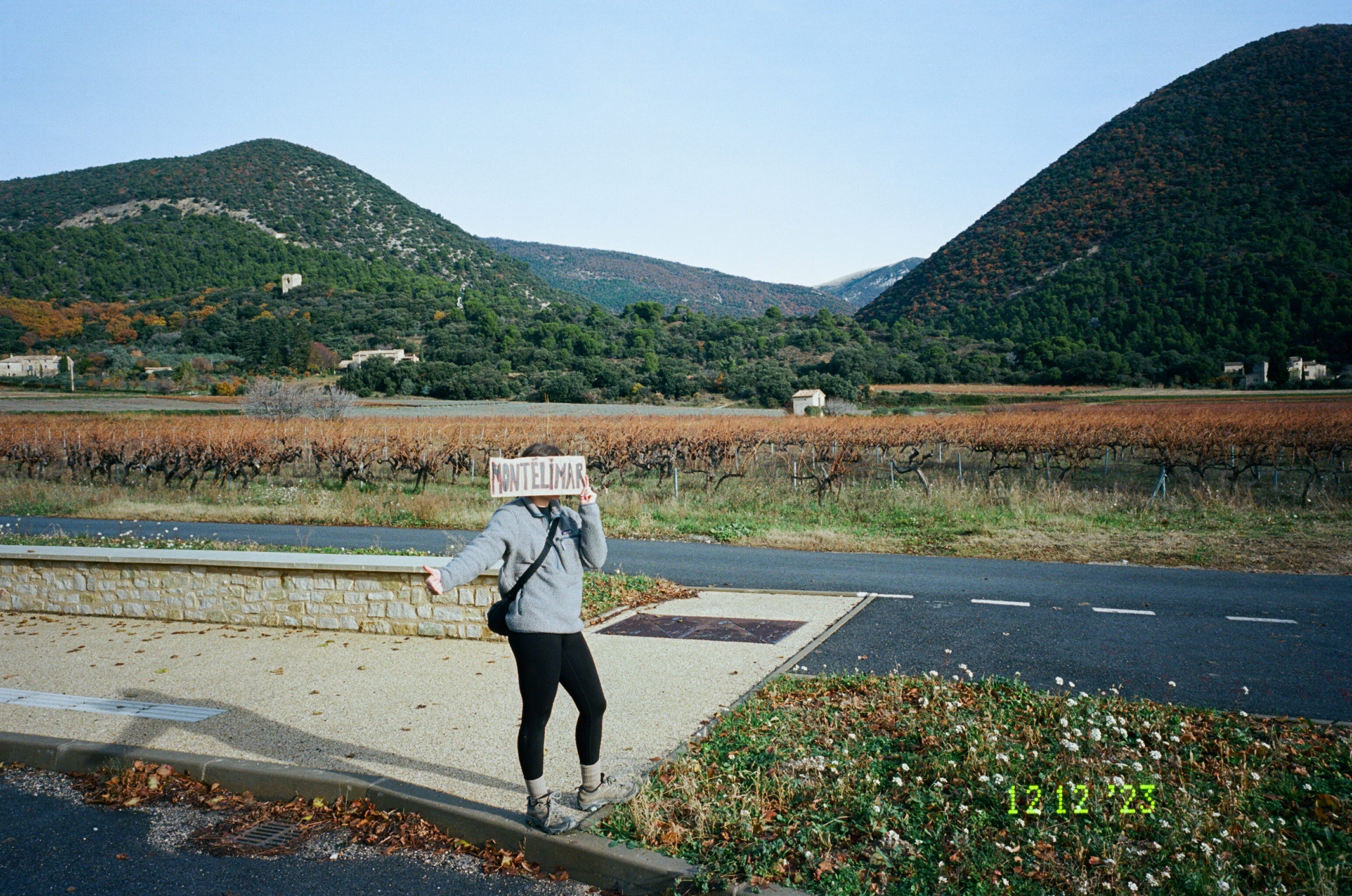
Hitchhiking only works if you have patience. I know that Nick appreciates how much hitchhiking has improved his ability to be patient. And I’m not talking about the kind of patience required when in the queue at the post office for 20 minutes, waiting to return the 8, 10, & 12 because you now need to order the 14 after one too many croissants. No, I’m talking about the kind of patience required when you are stood at the side of a busy round-a-bout, in 25 degree heat, often for 3 hours or longer, holding a greasy pizza box with ‘Marseille’ scribbled on it.
You are probably reading this now in disbelief that we can find this enjoyable, but I promise you, the feeling we get when we see a car pull in, or hear it slowing down, is euphoric. We aren’t superhuman, of course we lose patience sometimes. Luckily, when one of us sees the other dropping in energy, we have some things that we can resort to for that much needed boost. These include singing at the top of our lungs (Nick always in the wrong key), practicing my best French (I can now count to 12) , or more often, playing a game whereby we have to make each other laugh by using increasingly crude curses under our breaths towards the drivers who refuse to give us eye contact. We understand that people can’t pick us up, but we find it difficult when they deliberately avoid looking at us - being ignored is not a nice feeling.
Eventually someone will pick us up, and we are fortunate that we find beauty in spending multiple days going from service station, to round-a-bout, to service station, with the knowledge that with a little bit of patience, a little bit of laughter, and a little bit of leftover pesto pasta, we will get to our destination.
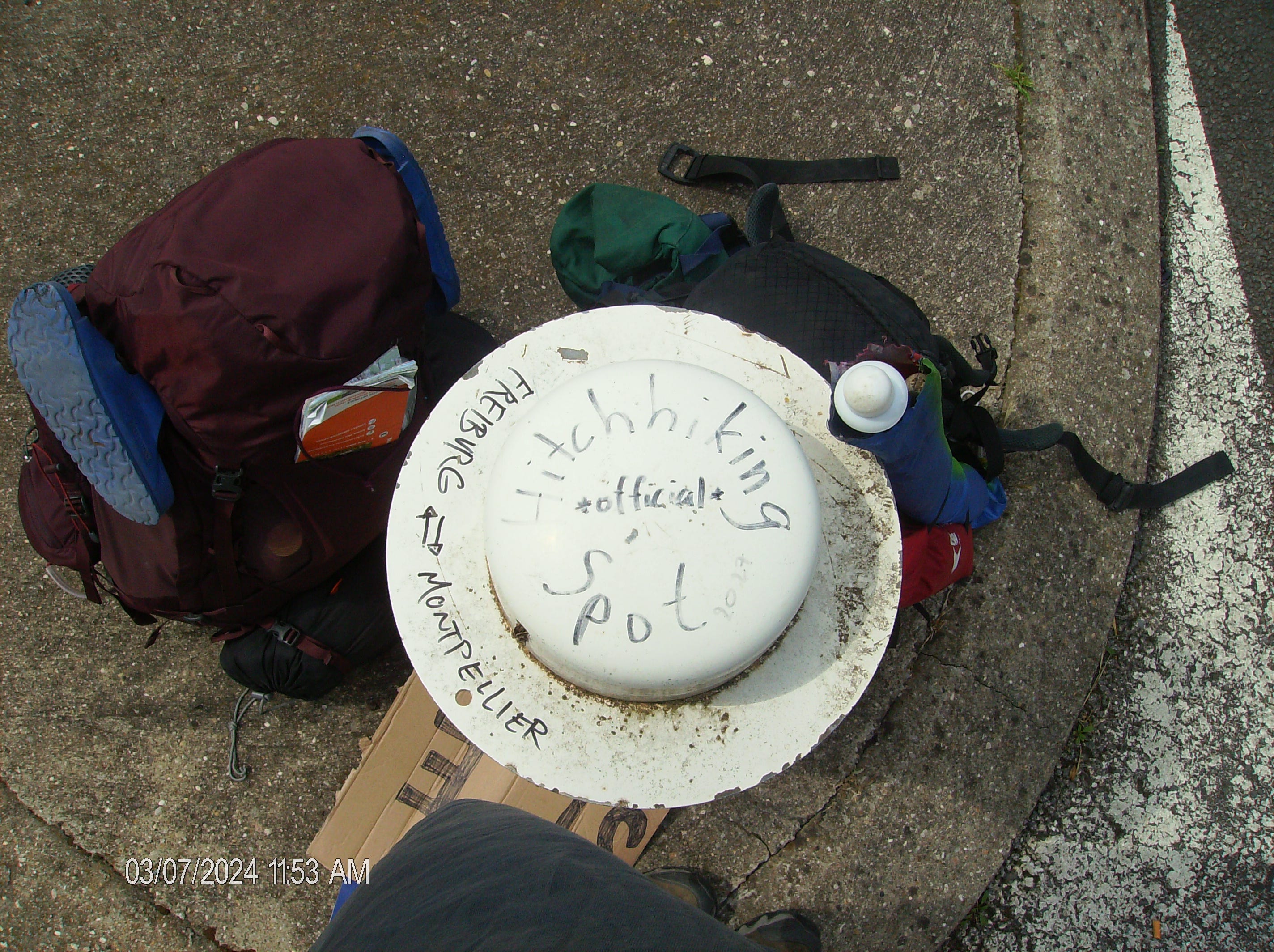
It’s interesting to me that Lois writes ‘…our destination’, because alongside patience, another foundation of hitchhiking is flexibility. Not the physical kind, despite the fact that there have been numerous occasions when I wish I had listened harder in yoga class as I try to squeeze into the back of a 40 year old Peuguot alongside Lois, our backpacks, 4 boxes of foie gras, a floor lamp and two dogs. No, I mean flexibility in our travels. Sometimes we do have a ‘destination’, but on the whole, we take our travelling day-by-day. Before we set out hitching for the day, we will do some planning. We will spread the maps out on whatever surface we can find, decide on a vague route that we would like to follow, and think about what signs we might want to create to assist us on our way. We keep it vague because were we to make our plans more concrete, we would almost certainly end up being disappointed, when we ended the day stuck on the side of the road, 4 sore thumbs, and still holding out for that ‘perfect lift’. We take what lifts we’re offered (within reason), and with that attitude we end up in places that we didn’t even notice on the map earlier that day, let alone plan on spending a week at.
‘The journey is the destination’ is one of the classic travelling clichés, but for us it is much more than that. It is the foundation of our travelling, and the flexibility that aides our hitchhiking is the perfect tool for reminding us of that fact. After all, if you don’t know where you’re going, any road will take you there.
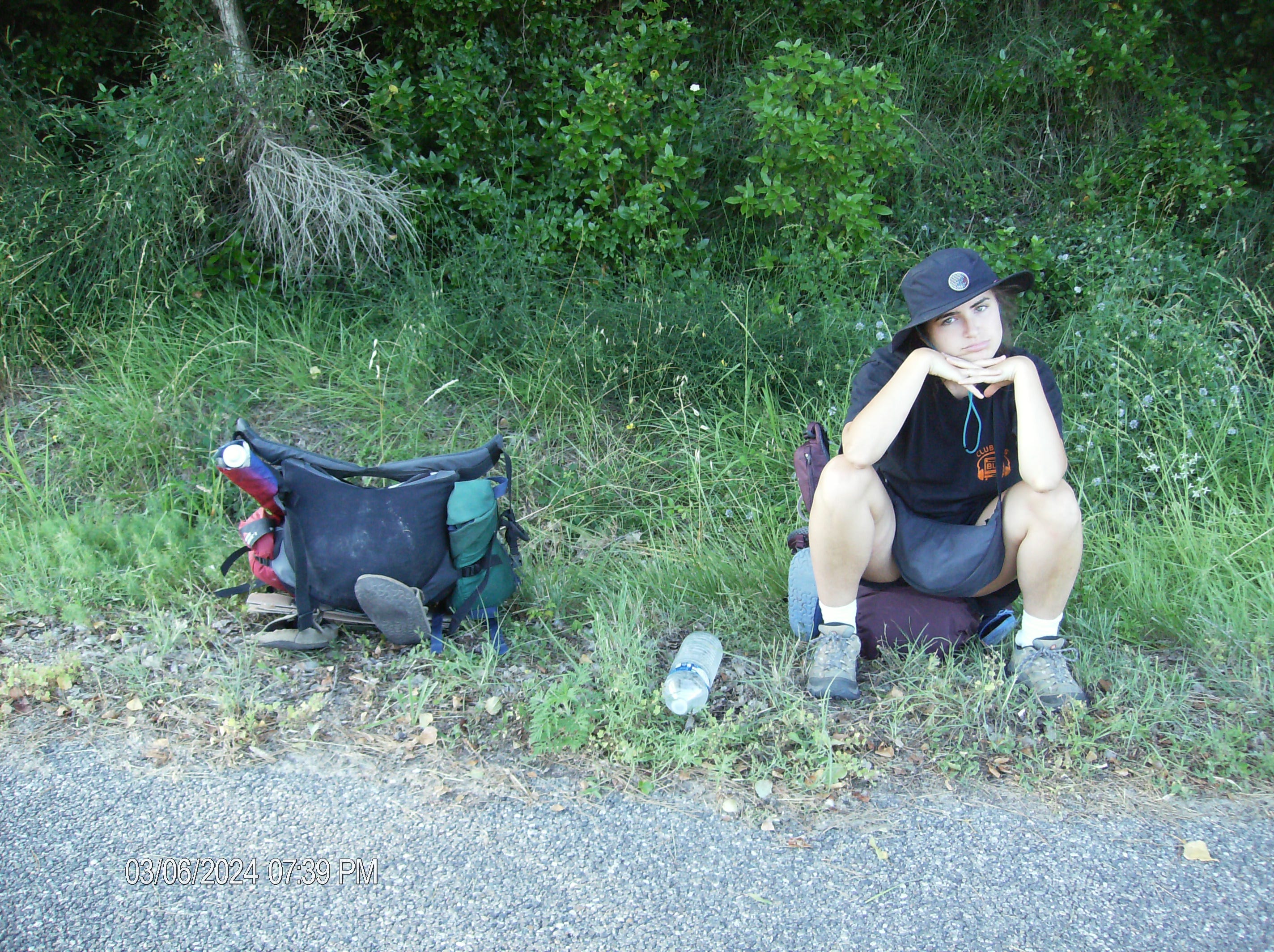
Yoga classes, Nick? There’s poetic licence and then there’s pure bullshit…
Any hitchhiker will tell you that ‘the spot’ is the most important element when trying to hitchhike - it is the place where we stand, put our thumbs out, and wait. Despite what you may think, it is hard to find the perfect spot.
For starters, we have never visited the area before so we are relying solely on maps to navigate us to an unknown round-a-bout/lay-by/petrol station. Secondly, the spot needs to be safe. Safe for us to stand at without fear of being crashed into, and safe for drivers to pull into without fear of being… crashed into. We don’t always agree on the safety element: Nick seems to think that your everyday driver is trained in Formula 1 pit-stop-style manoeuvres (eye roll). So we may walk for an hour to get ourselves to a safe spot or, if leaving a big city, we may opt to take a bus to a suburb for easier access to the roads we want. Standing at the side of a motorway is illegal. Toll stations are perfect. Quieter streets are safer but… quieter. And of course, we prefer it when cars are not going back to where we started the day (look out for a blog on Axel…). It’s a game, it’s a challenge, and the majority of the time we love it.
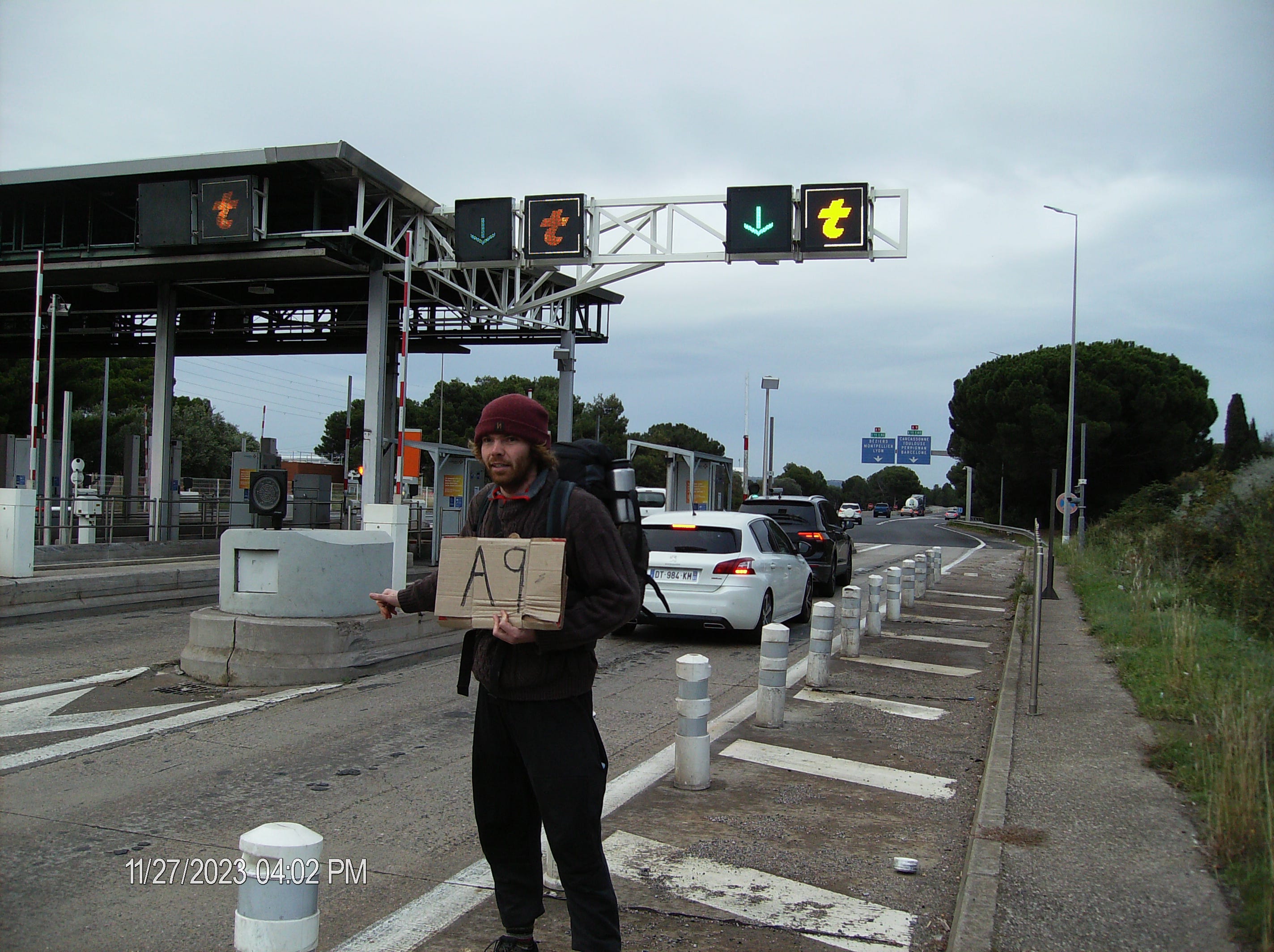
I won’t comment on what Lois says about my views on safety. All I will say is that for those of you who have had the pleasure of being in a car with my mother, you will understand that road safety is not something I am able to take lightly.
There is so much more to say about hitchhiking but we genuinely need to hit the road now to find our spot (Lois is making a sign as I type). Grab a friend, take a day off work, and make a sign - see where you end up and, remember, be patient, be flexible, and pick your spot wisely!
Thanks for adding me! Looking forward to more and take care both.
Best one yet